The Story
Plum Park in Kameido
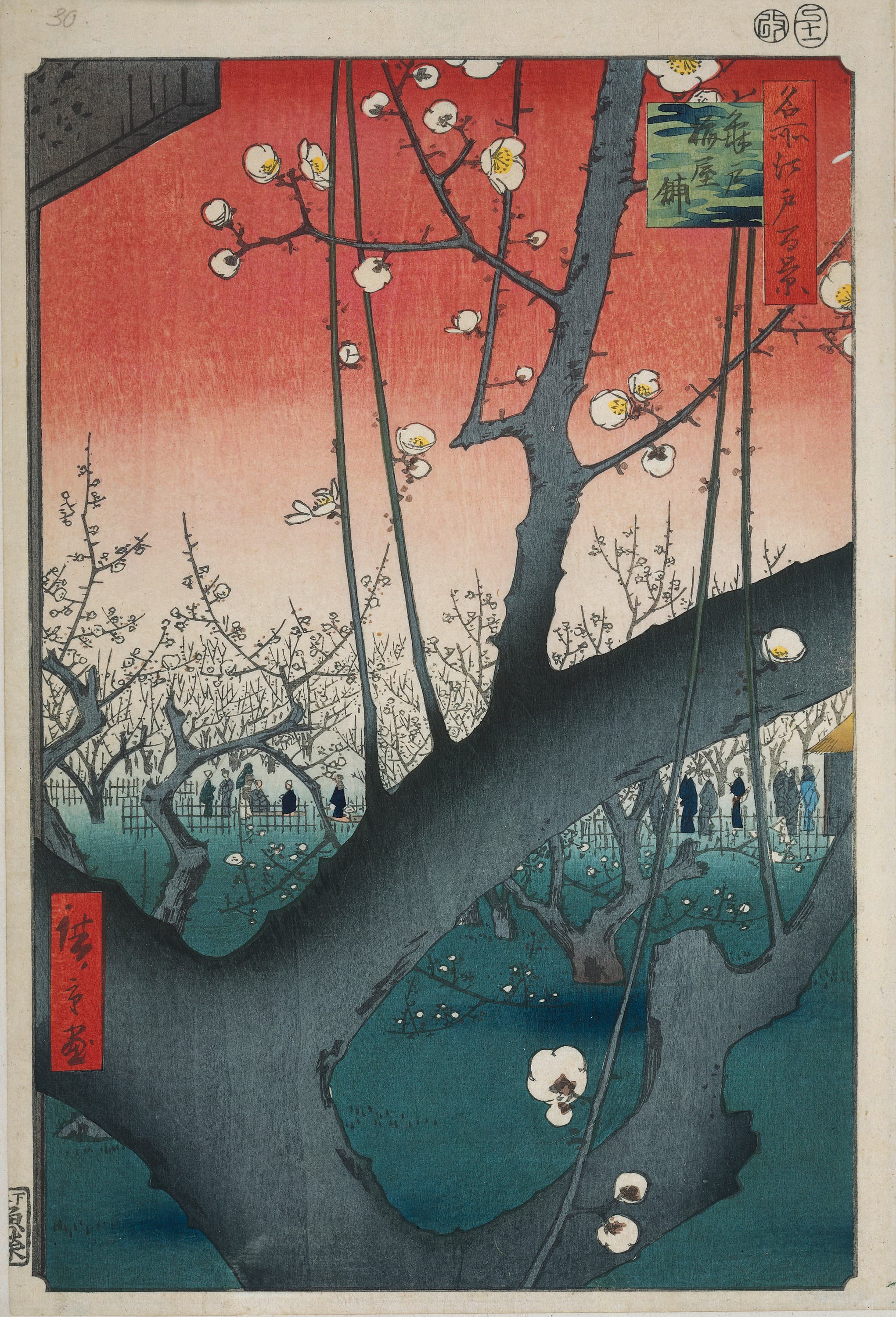
Published in 1857 in Hiroshige's famous One Hundred Famous Views of Edo series, Plum Park in Kameido shows a flowering plum tree in extreme close-up, its dark, gnarled branches cropped by the edges of the print so that the blossoms hover against a plain background as pure pattern and colour. In the middle distance, tiny figures promenade through the park below more trees. The contrast between the monumental foreground tree and the miniaturised background scene creates a spatial compression that is simultaneously disorienting and electrifying.
The compositional device — cropping a natural element at the very edge of the picture plane to create an abstract foreground screen — was among the most influential formal innovations that Japanese prints introduced to Western art. Van Gogh was so struck by this particular print that he made an oil-painted copy of it in 1887, carefully adding a Japanese-character border to his version, and kept it in his collection. The lesson he drew from Hiroshige — that a painting could be organised around bold, flat, rhythmically repeating shapes rather than perspectival recession — is visible throughout his mature work, from the orchards of Arles to the wheat fields of Auvers.
The plum — which flowers in late winter, sometimes in snow — is among the most beloved symbols in Japanese culture, associated with perseverance, hope, and the courage to bloom before spring has properly arrived. Hiroshige's print captures both the specific pleasure of Kameido's famous plum gardens, a popular Edo-period tourist destination, and the enduring symbolic weight of the flower itself. It is a print about beauty in the cold, about the conviction that life returns.
About the Artist
The Artist
Utagawa Hiroshige
Japanese · Edo Period
Utagawa Hiroshige (1797–1858) was a master of Japanese woodblock printing best known for his lyrical landscape series, most famously One Hundred Famous Views of Edo. Where many ukiyo-e artists focused on figures and theatre, Hiroshige turned his genius to rain-soaked streets, misty mountains, and blossoming plum trees, elevating the ordinary Japanese landscape to poetic transcendence. His innovative cropping and atmospheric perspective directly inspired Van Gogh, Whistler, and the broader Japonisme movement that swept through European art in the late nineteenth century.
Own a Piece of This Masterpiece
Bring Plum Park in Kameido Into Your World
Museum-quality reproductions and artisan objects inspired by this masterwork — scarves, mugs, prints, and more. Crafted with the care the original deserves.