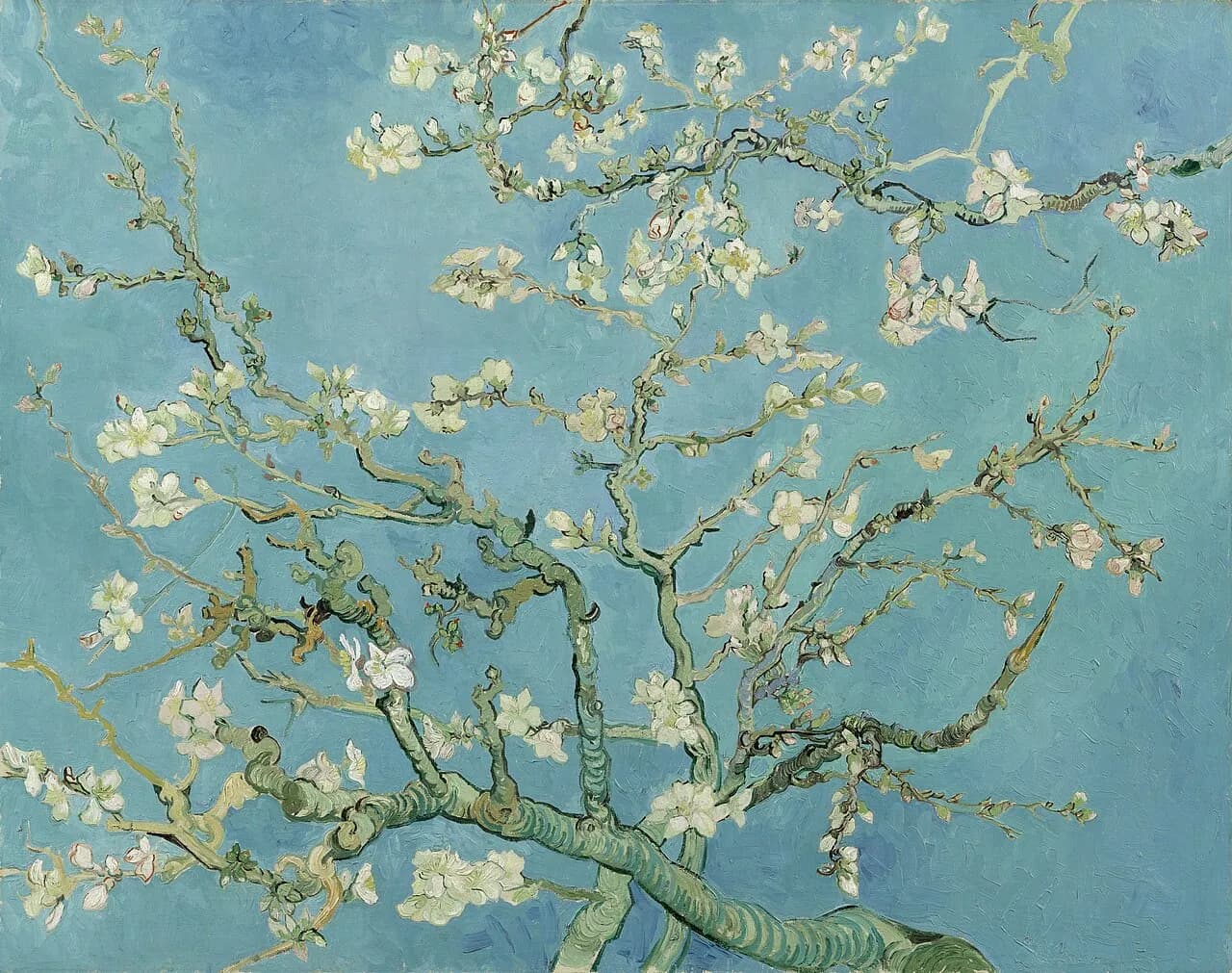
Almond Blossom Coaster
Based on “Almond Blossom” (1890), Van Gogh Museum, Amsterdam
Van Gogh's spring blossoms for your tabletop — a single ceramic coaster in brilliant blues and whites.
Quantity
In January 1890, Van Gogh's brother Theo wrote to him at the Saint-Rémy asylum with extraordinary news: he had become a father. The boy was to be named Vincent Willem — after his uncle. Van Gogh, in one of the longest periods of calm he had known since his breakdown, set to work immediately on a painting to hang above the baby's cradle. He chose almond blossoms because almond trees flower in late winter, the very first sign of the new season — an ancient symbol of hope and new beginnings, perfectly suited to welcome a new life into the world. The painting is unlike anything else in Van Gogh's oeuvre. Gone are the swirling, emotionally turbulent brushstrokes of Starry Night or the distressed energy of many Saint-Rémy canvases. Instead, white and pale pink blossoms spread across a luminous turquoise-blue sky with a clarity and stillness that feels genuinely at peace. The composition was directly influenced by the Japanese woodblock prints Van Gogh had been studying for years — particularly the flat, graphic quality of Hiroshige and Hokusai — but the resulting image is entirely his own: light-filled, tender, and almost shockingly beautiful. Van Gogh died in July 1890, just months after completing the painting, never knowing how loved and celebrated it would become. His sister-in-law Jo hung it above Theo's deathbed later that year and kept it until the Van Gogh Museum was established. Today it is one of the museum's most beloved works, visited by millions of people who stand before it and feel, despite knowing everything that came after, a sense of uncomplicated joy. Van Gogh gave his nephew a painting. His nephew eventually gave it to the world.
Vincent van Gogh, 1890
Read the full story →Ceramic with cork backing. Wipe clean with a damp cloth. Do not soak in water or put in dishwasher.